

- Best offer
- -zł150.00




local_shipping Shipping and Payment Information
SAFE ONLINE PURCHASE
If you have concerns about buying our product online, we will bring it for free and decide on its purchase. We guarantee 100% satisfaction and complete purchase security.
Guilloché enamel (French: guilloché enamel) is a decorative technique combining precise metal engraving with transparent or translucent enamel. It gained its greatest popularity in the late 19th and early 20th centuries, particularly in luxury jewelry and watchmaking.
What is the technique?
First, a decorative geometric pattern is carved onto a metal surface—usually gold or silver—using a special lathe or engraving machine. The patterns can resemble waves, rays, spirals, or grids. The surface is then coated with a thin layer of colored enamel and fired at a high temperature.
The transparent enamel allows the engraved pattern to remain visible underneath and reflect light, creating an effect of depth and shine.
Characteristics:
Highly precise, repeatable ornamentation,
Effects of changing light and color,
Elegant, luxurious appearance,
Highly difficult to execute.
History
The guilloché technique developed particularly in France and Russia. It became a symbol of luxury during the Art Nouveau and Art Deco eras. One of the most famous artists to use this method was Peter Carl Fabergé, who created the famous Fabergé eggs for the Russian Tsarist family.
Uses
Guilloché enamel was and still is used to decorate:
jewelry,
watches,
snuffboxes,
decorative boxes,
icons, and art objects.
Today, this technique is valued primarily in exclusive watchmaking and decorative arts, as it requires immense precision and experience.


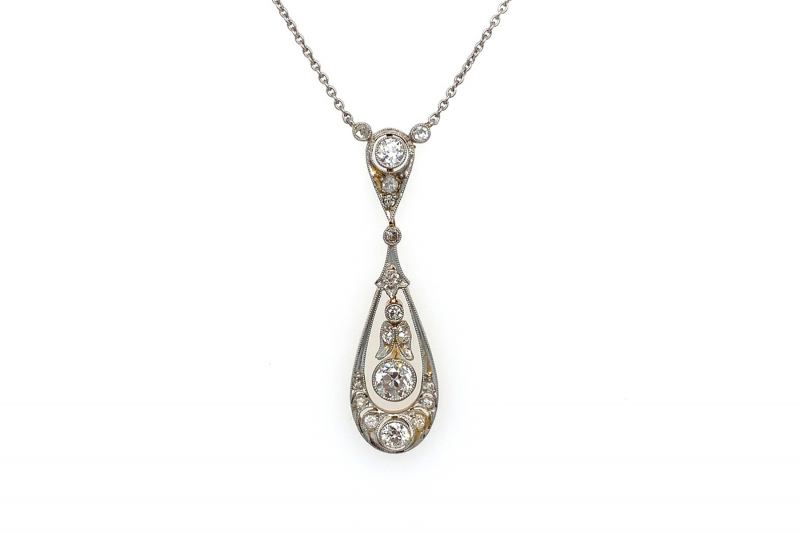
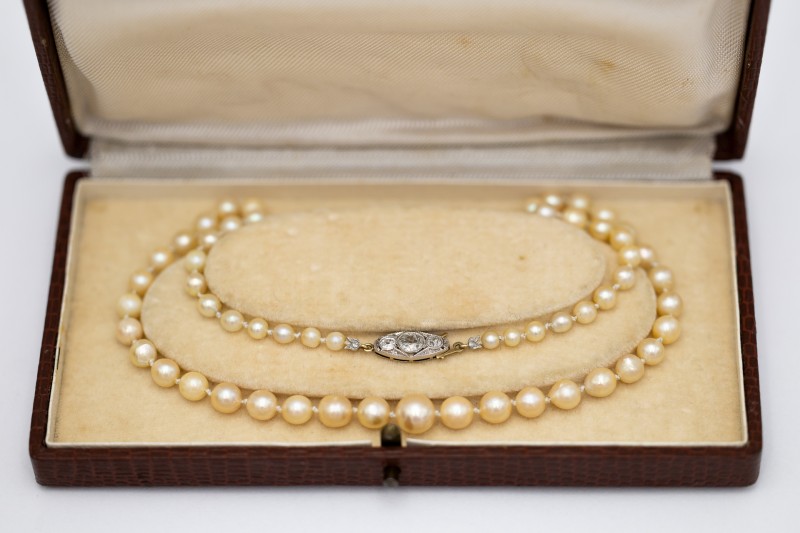

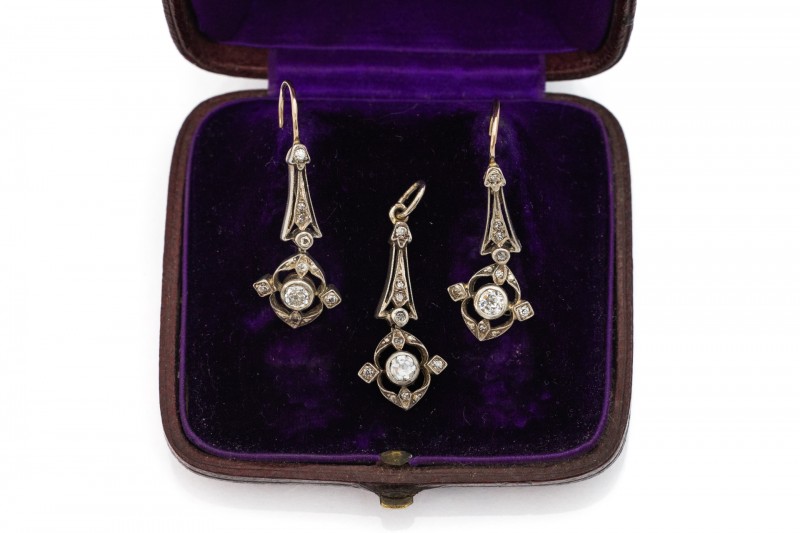
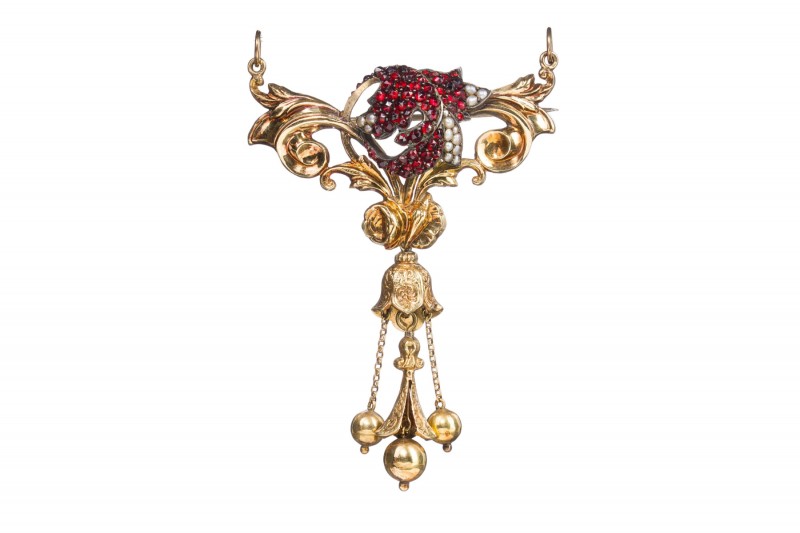


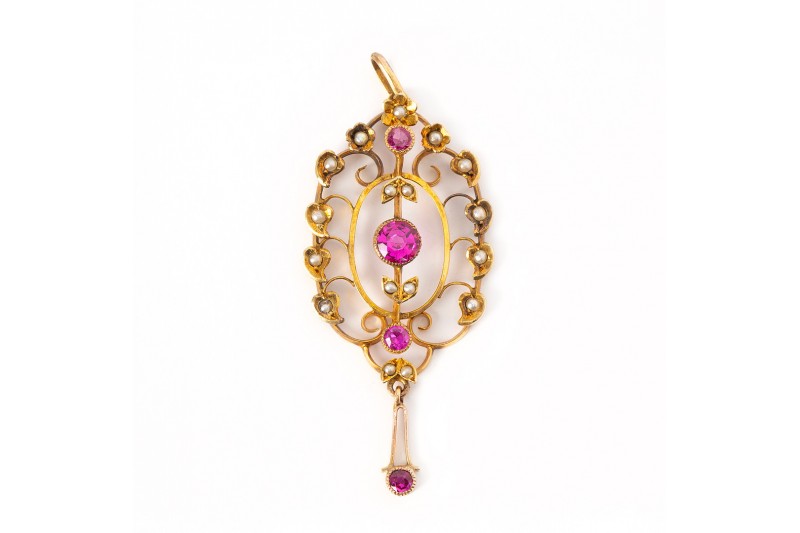
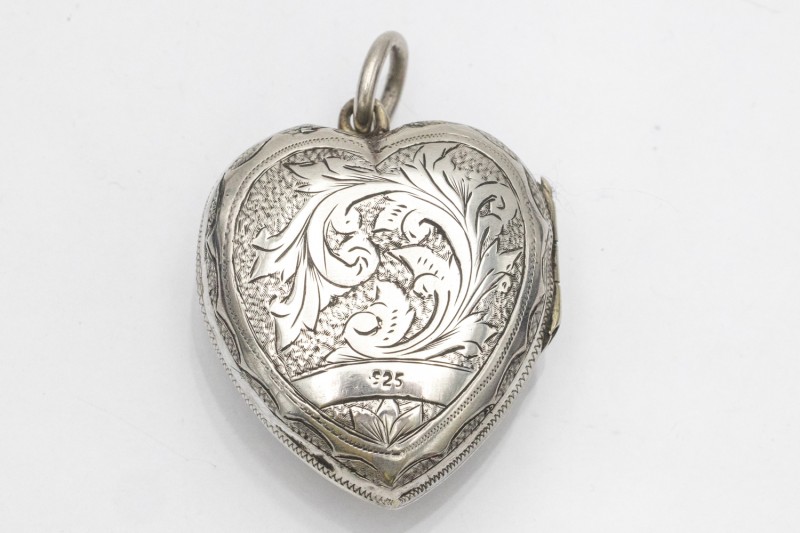
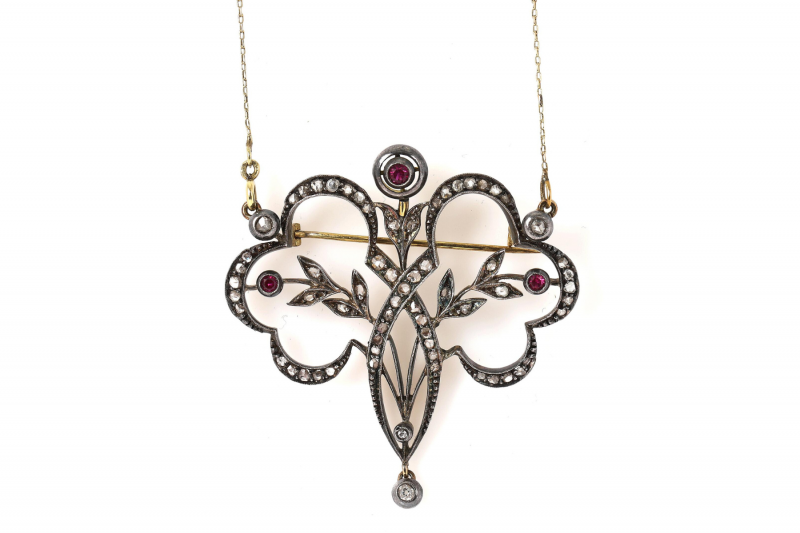
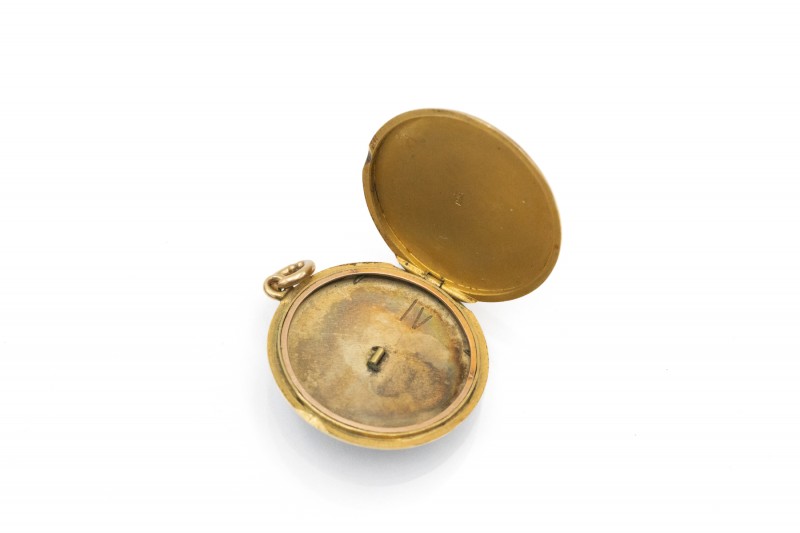
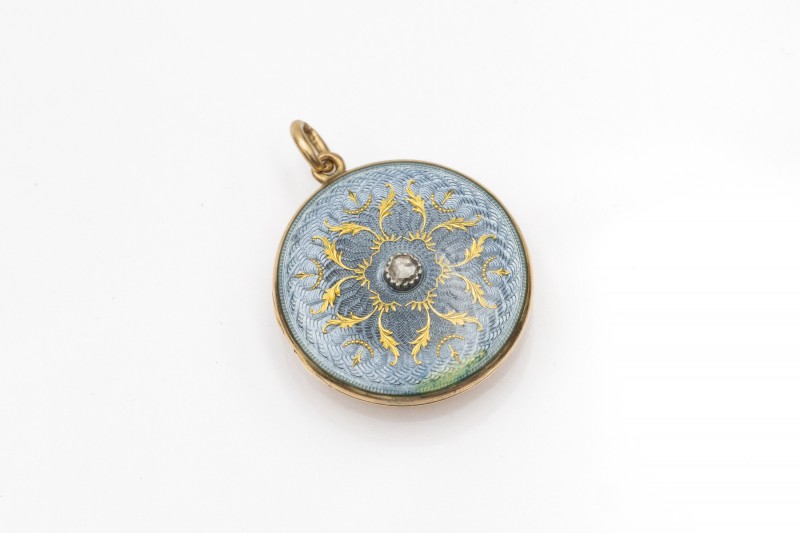
Antique pendant, locket with space for a photo of a loved one
Crafted of 14-karat yellow gold (0.585 fineness) and decorated with blue guilloché enamel with an additional gold floral motif and a rose-cut diamond.
Guilloché enamel is a decorative technique used in luxury jewelry in the early 20th century. It involves covering engraved metal with transparent enamel, creating a depth and shine. It was particularly popular in luxury jewelry and watchmaking, including at Peter Carl Fabergé.
Origin: Western Europe, early 20th century
Item weight: 8.71g
Diameter: 2.5 cm
Length with pendant: 3.2 cm
A jewelry certificate is included with the purchase.
Very good condition, slight green discoloration at the bottom of the locket