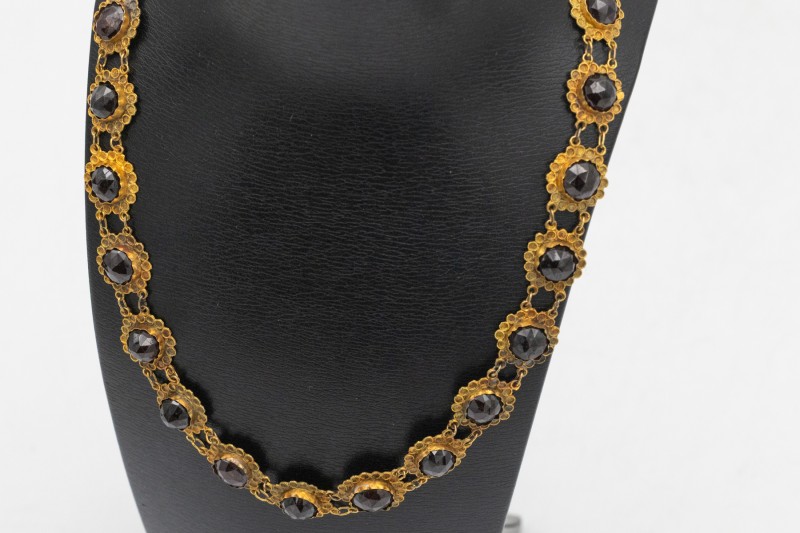
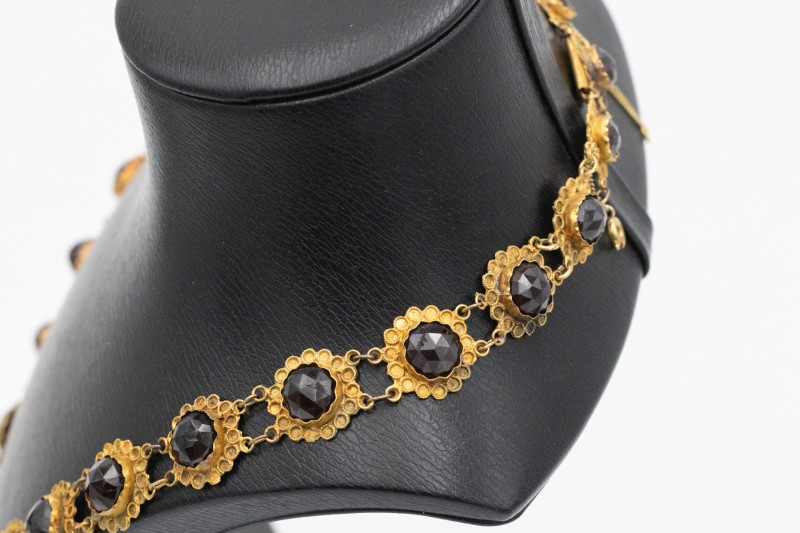
Bootjesketting necklaces are a distinctive type of jewelry that emerged in the Netherlands in the 19th century and gained popularity, especially among the bourgeoisie. The name comes from the Dutch word "bootjes" meaning "boats" and "ketting" meaning "chain" or "necklace."
Characteristic features of bootjesketting necklaces:
Boat-shaped elements
The name comes from the characteristic, elongated, convex links resembling boats, often made of gold or silver.
Necklace construction
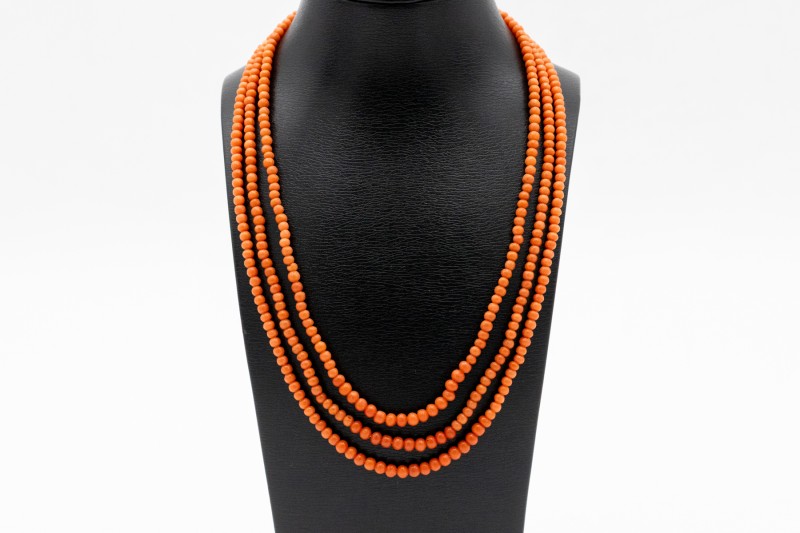
The necklace consisted of several rows of links arranged in parallel, creating a wide, visually rich band.
It was finished with a decorative clasp or medallion, which could also serve a decorative or symbolic function.
Folk and regional style
Necklaces of this type were popular primarily in rural Dutch regions, especially in Friesland, Zeeland, and other parts of the Low Countries.
They were often part of traditional folk costume and worn on important occasions – weddings, religious holidays, and church fairs.
They were worn primarily by women as neck decorations, but also as symbols of financial status.
Social and Symbolic Function
Besides their decorative function, a bootjesketting necklace was a sign of wealth – the wider and more ornate the necklace, the higher the social status of the wearer.
They were often passed down from generation to generation as a family heirloom.
Making Technique
The links were soldered by hand, requiring a high degree of craftsmanship.
They were often adorned with engravings, enamel, or filigree, which added a touch of lightness and finesse to the necklace.
Summary:
Bootjesketting necklaces are a type of traditional Dutch jewelry with a unique shape and cultural significance. They are distinguished by their "boat"-shaped links, precise workmanship, and social function. Today, they are valued as antiques and symbols of the Dutch cultural heritage.